ME-Boot for Deos is a fundamentally different approach to board level RTOS Board Support Packages which include boot code, pre-OS loading activities (e.g., secure boot), and OS component loading and launch. ME-Boot was developed to improve BSP cost, time, and development risks.
Key features include:
👉 Certifiable to DAL-A
👉 Modular – BSP components are comprised of independent executables
👉 Portable – reusable binary components
▪️ Accelerates time-to-market for new products
▪️ Significantly lowers costs and risks
👉 Extensible – allows custom capabilities and add-on functionality such as:
US Army Selects DDC-I’s Deos Safety-Critical RTOS for MOSA-Aligned HADES Program
The HADES program utilizes FACE® conformant Deos RTOS running on North Atlantic Industries hardware and TTTECH time sensitive networking to enable digital backbone capabilities for advanced ISR capabilities
DDC-I works with TTTECH to Bring TSN to Edge Processing and Sensors
Time Sensitive Networking typically is used for the digital backbone. But now, with the combination of DDC-I Deos and TTTECH TSN-End Point IP Integration Kit deployed on the Ultrascale+ SoC platform, TSN can be extended to the edge.
Achieve:
✅ High-performance bandwidth at much lower SWaP
✅ Significant cost savings in areas such as wiring and weight
✅ Connect data control units, control/sensor nodes, and intelligent TSN modules
From Single-Core to Multi-core How Aviation is Navigating the Most Important Processor Shift in Decades
In this Industry Interview, Gary Gilliland, VP of Marketing at DDC-I, discusses the move to Multi-core.
“The acceptance of multi-core has historically lagged in our industry due to concerns of determinism and difficulties multi-core can pose for real-time and safety-critical systems. Over the past decade, those concerns have largely diminished.”
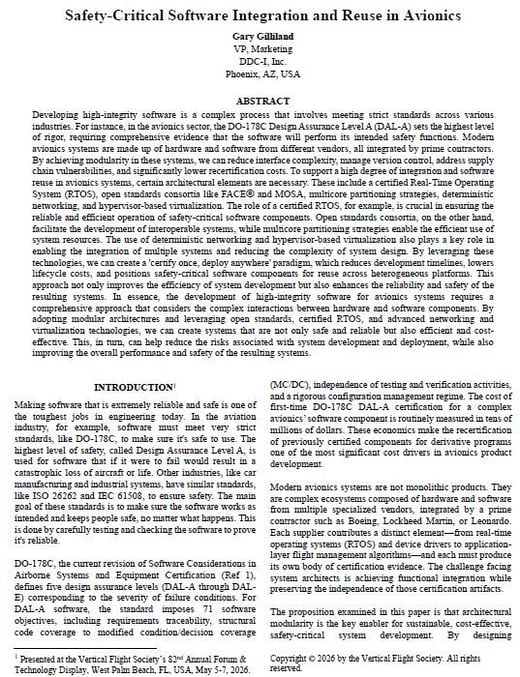
Safety-Critical Software Integration and Reuse in Avionics Whitepaper
Making software that is extremely reliable and safe is one of the toughest jobs in engineering today. To support a high degree of integration and software reuse in avionics systems, certain architectural elements are necessary. These include a certified Real-Time Operating System (RTOS), open standards consortia like FACE® and MOSA, multi-core partitioning strategies, deterministic networking, and hypervisor-based virtualization.
The role of a certified RTOS is crucial in ensuring the reliable and efficient operation of safety-critical software components.
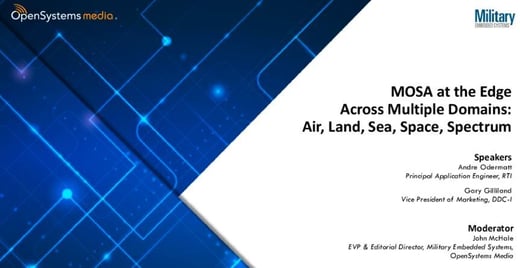
Employing MOSA in DoD Programs: Implications for Real-Time Operating Systems
Read about three critical abilities that an RTOS needs in order to fully support a MOSA architecture: 🔸Modularity allows reuse & incremental upgrades to both hardware & software
🔸Abstracting software from hardware for portability
🔸Managing a wide variety of data I/O to support various sensor configurations
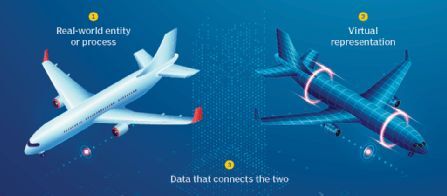
This webinar will dive into how using “digital twins” to develop software before hardware is available – or to accelerate upgrades to existing systems.
If you would like to set up some time to talk to one of our experts, submit a meeting request and we will get back to you to set up a date and time. Please feel free to forward this email to your colleagues to access our resources.
DDC-I, 4545 E. Shea Blvd., Suite 210, Phoenix, AZ 85028, United States, 1-602-275-7172